Quinquina Dubonnet
Artist
Jules Chéret
1836–1932. Lithographer, poster artist. Born in Paris.
Chéret was apprenticed to a lithographer at thirteen. He spent the early 1860s in London designing labels and book covers, then returned to Paris in 1866 and opened his own lithographic press.
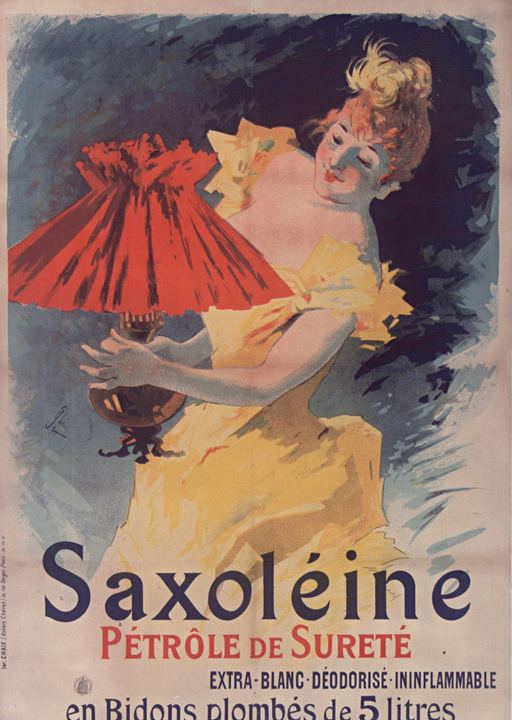
Working directly on the stone, he drew image and lettering together in a few flat colours. His posters filled Paris walls for three decades and earned him the label “father of the modern poster”. His lettering is loose, condensed and confident, made to be read across a boulevard.
- Jules Chéret
- 1895
- Belle Époque
- France
- Condensed sans, Display
- Not stated on this copy
- 56 × 40 cm, reduced print
- Library of Congress, Prints and Photographs Division
- LCCN 2004665793
- Wikimedia Commons
- Public domain
Fonts
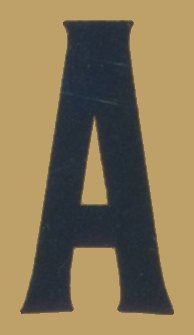
Arched Capitals
Letters from the poster
Full typeface
Lettering style
Download
Apéritif Capitals
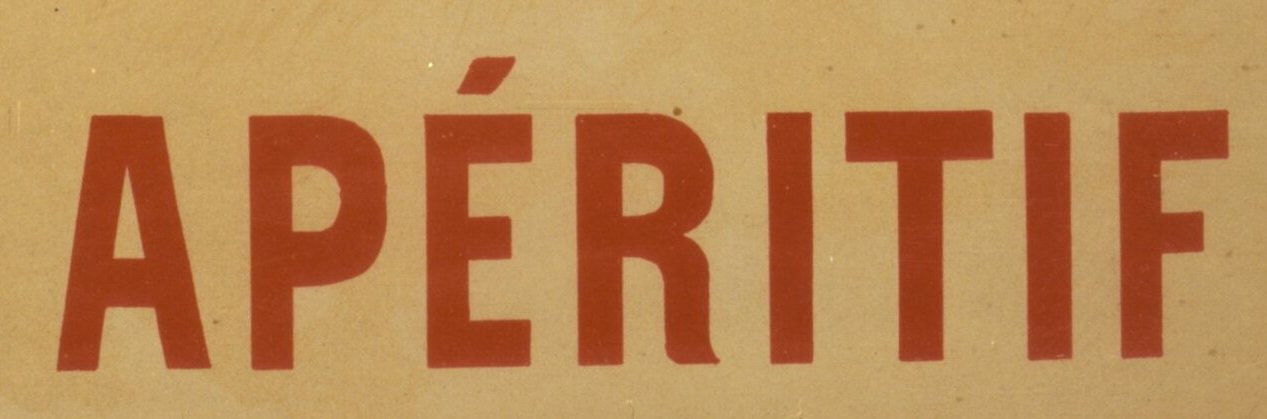
Letters from the poster
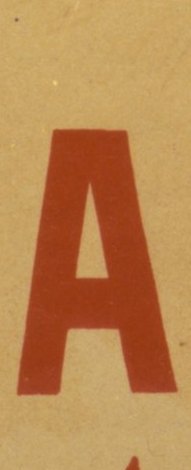
Full typeface
Lettering style
Download
Café Lowercase

Letters from the poster
Full typeface
Capitals
Lowercase
Lettering style
Download
History
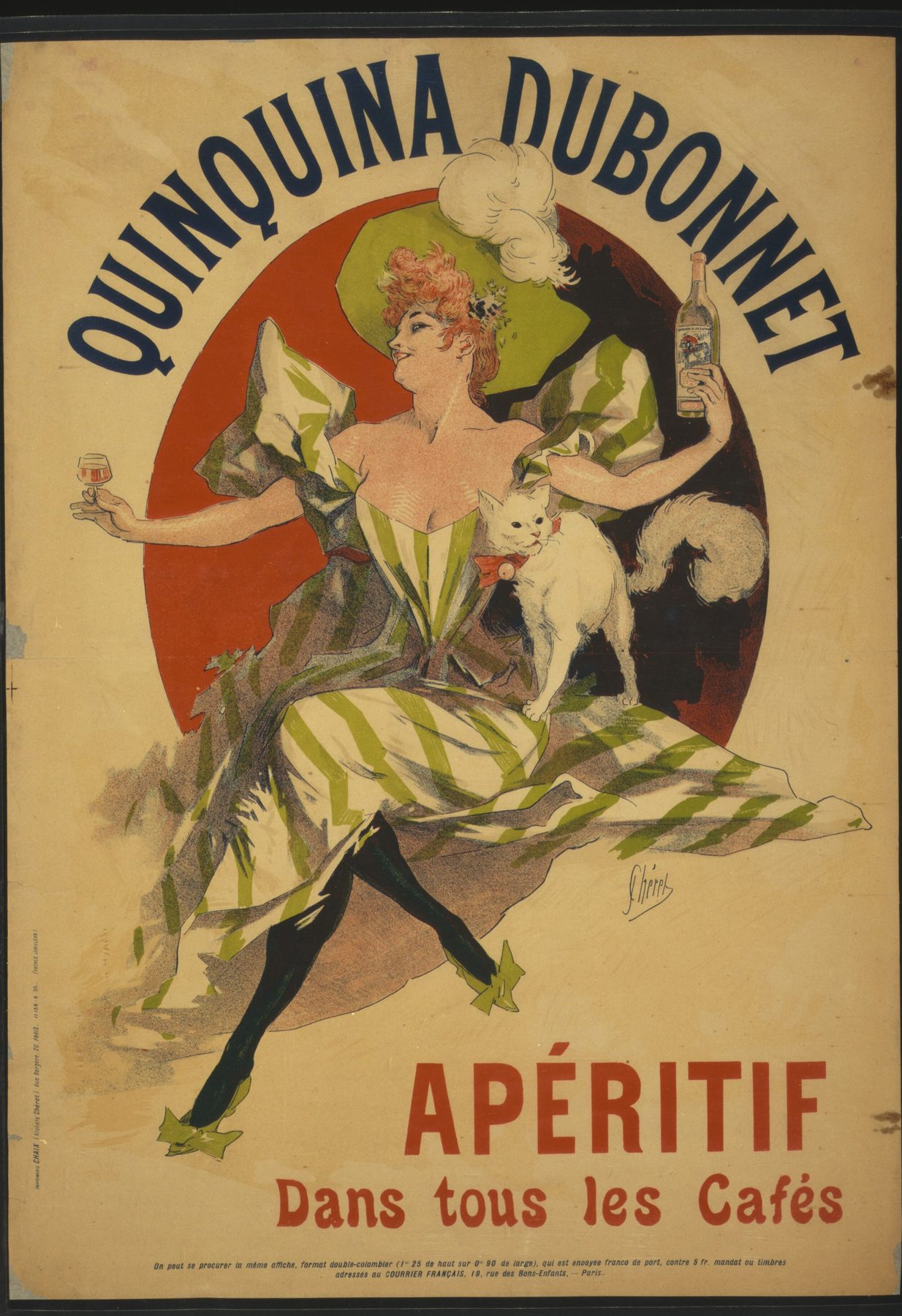
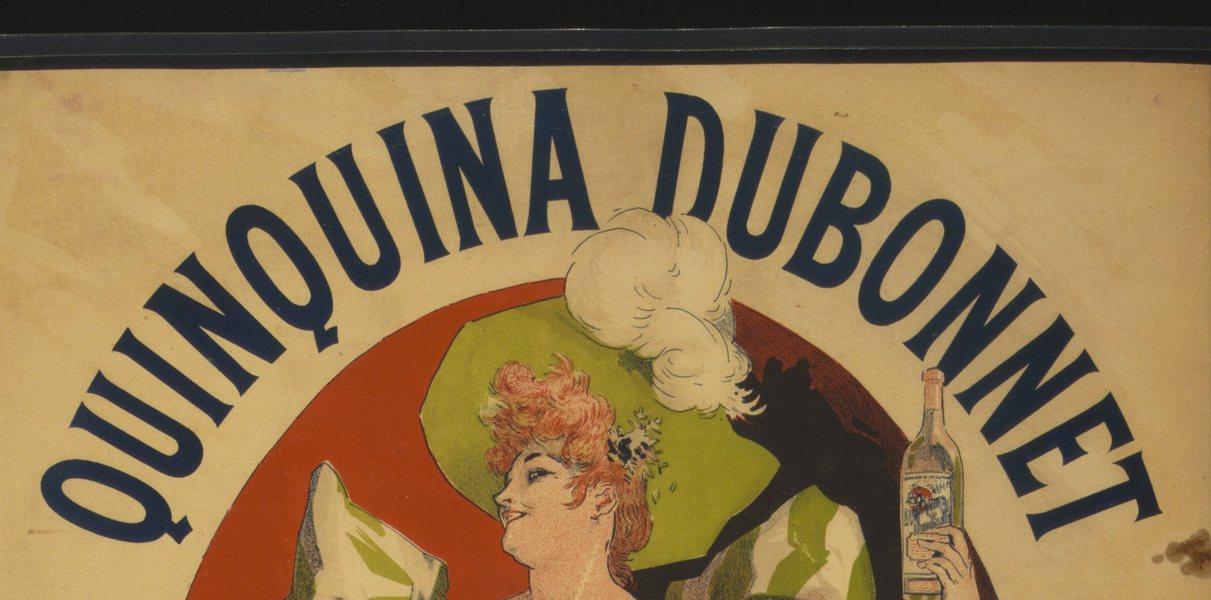
Dubonnet is a wine aperitif flavoured with quinine, created in Paris by the wine merchant Joseph Dubonnet in 1846. The usual story is that it was meant to make quinine, taken against malaria, easier to swallow for French soldiers in North Africa. By the 1890s it was a café staple, which is all the poster needs to say: apéritif, dans tous les cafés.
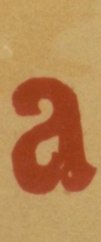
Chéret drew it in 1895, at the height of his career. Everything is lettered by hand. Three different kinds of lettering share the sheet: the brand name follows the curve of the disc in navy, APÉRITIF stands straight in red, and the last line drops into a heavy, flared lowercase.
The copy scanned here is a reduced print, 56 by 40 centimetres. A line of small type along the bottom offers the full double colombier poster, 125 by 90 centimetres, sent post free for 5 francs by the weekly Le Courrier français, 19 rue des Bons-Enfants, Paris.
Source and rights
Jules Chéret died in 1932. In Switzerland and the EU his work entered the public domain on 1 January 2003. The Library of Congress publishes the scan with no known restrictions.
Scan from Wikimedia Commons, catalogue record LCCN 2004665793. Brand names on the poster belong to their owners and are never used as font names.
Related posters
Same era, lettering or artist.